
What Is Copy Trading Crypto? A Clear Definition
Copy trading crypto is a method of participating in cryptocurrency markets by automatically replicating the trades of experienced investors in real time. Instead of analyzing charts, reading whitepapers, or monitoring order books yourself, you select a trader whose strategy appeals to you and let the platform mirror their activity directly in your own account. Every time the signal leader opens, adjusts, or closes a position, your account follows suit — proportionally scaled to your allocated capital.
This model has reshaped how retail investors approach digital assets. It lowers the barrier to entry significantly, making crypto markets more accessible to people who lack the time, skills, or confidence to trade independently. At the same time, it is far from risk-free, and understanding its mechanics is essential before you commit a single dollar. This guide covers everything you need to know about crypto copy trading explained from the ground up.
How Does Copy Trading Work? The Mechanics Explained
Understanding how does copy trading work means looking at the relationship between three participants: the platform, the signal leader (also called the master trader or provider), and the follower (you). Here is how the process flows from start to finish.
Step 1 — The Signal Leader Executes a Trade
An experienced trader connected to the platform places an order — for example, a long position on Bitcoin at a specific entry price with a defined stop-loss and take-profit target. This action is logged by the platform in real time.
Step 2 — The Platform Broadcasts the Signal
The platform's infrastructure detects the trade and immediately routes it to all followers who have subscribed to that trader. The speed of this broadcast is critical; millisecond delays can create meaningful price differences between what the leader paid and what you pay — a phenomenon known as slippage.

Step 3 — Your Account Mirrors the Position
Depending on your settings, your account opens an equivalent position automatically. Most platforms let you choose proportional copying (your allocation mirrors the leader's percentage-based risk) or fixed-lot copying (you always risk the same dollar amount regardless of the leader's position size).
The Difference Between Signal Copying and Full Portfolio Mirroring
Not all copy trading crypto platforms operate the same way. There are two distinct models worth understanding:
- Signal copying: You receive a trade alert — entry price, direction, stop-loss, take-profit — and either execute it manually or let an automated layer do it for you. This gives you more control but introduces more latency.
- Full portfolio mirroring: Your portfolio dynamically reflects the leader's entire open position set at all times. If the leader holds 20% of their portfolio in ETH, your copied portfolio does too. This is more seamless but means your capital is constantly moving in lockstep with someone else's decisions.
Understanding this distinction matters when choosing a platform. Cryptohopper's CopyBot feature, for instance, leans toward signal-based copying routed through its marketplace, while some social trading platforms offer deeper portfolio synchronization.
How Platforms Match Followers With Leaders
A good best crypto copy trading platform does more than just relay orders — it provides a structured discovery layer that helps followers identify compatible traders. Here is how that matchmaking typically works:
- Performance dashboards: Platforms publish verified statistics for each signal leader, including total return, monthly return, maximum drawdown, win rate, and average trade duration.
- Risk scoring: Automated risk scores — often on a scale of 1 to 10 — assess how aggressively a trader operates based on leverage used, frequency of large drawdowns, and volatility of returns.
- Follower counts: Seeing how many other users copy a trader offers social proof, though high follower counts can themselves create problems (more on that shortly).
- Asset focus and strategy tags: Leaders are often categorized by the assets they trade (BTC, altcoins, DeFi tokens) and their strategy style (scalping, swing trading, trend following).
- Compatibility filters: Many platforms let you filter by minimum capital required, compatible exchanges, or geographic availability.
Cryptohopper: Copy Trading Through the Marketplace and CopyBot
When discussing copy trading crypto in 2026, Cryptohopper stands out as one of the most feature-rich platforms available. Its approach combines an automated trading bot infrastructure with a curated social layer called the Cryptohopper Marketplace.
The Cryptohopper Marketplace
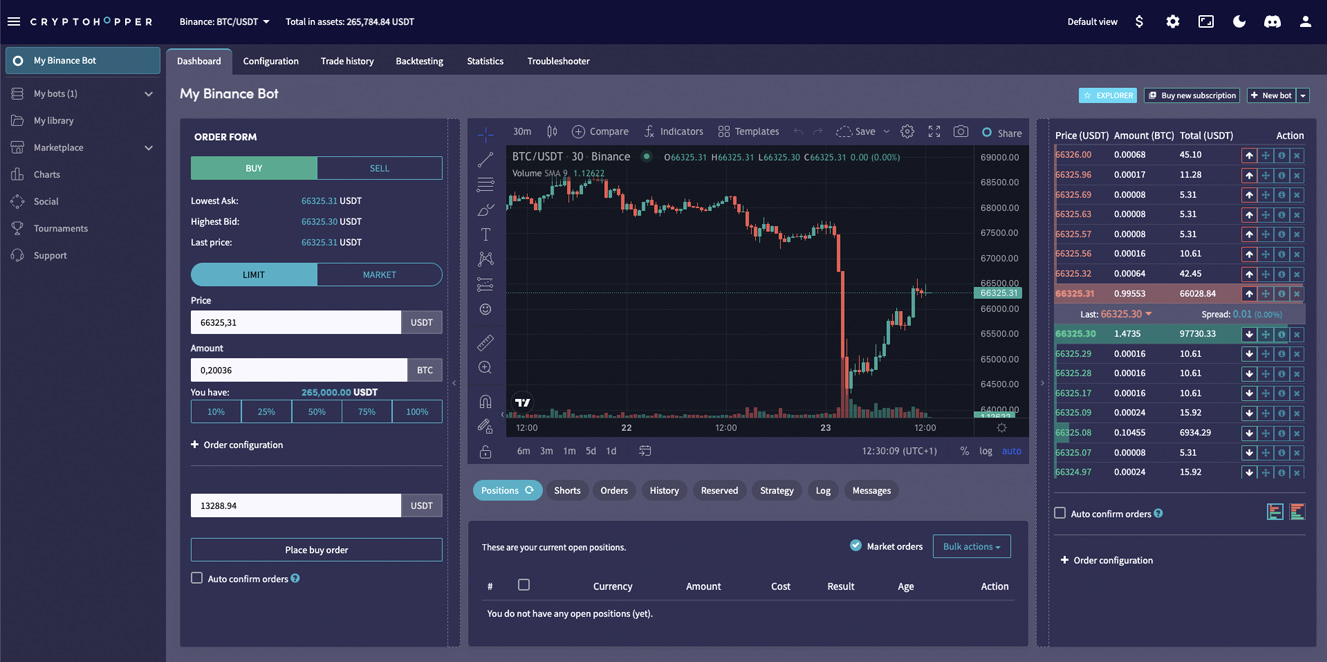
The Marketplace is where signal providers — professional traders or experienced algorithm designers — publish their strategies for others to subscribe to. Followers can browse providers by asset, exchange compatibility, performance history, and subscriber count. Once you subscribe to a signal provider, Cryptohopper's CopyBot feature handles execution automatically, routing trade signals into your connected exchange account without manual intervention.
The CopyBot Feature
Cryptohopper's CopyBot is specifically designed to reduce the friction between receiving a signal and acting on it. It connects to major exchanges via API, monitors incoming signals continuously, and executes orders within seconds of the leader's original action. Users can set allocation limits, define maximum open positions, and apply their own stop-loss rules as a safety layer on top of the copied signals — a useful feature for risk-conscious followers who still want some autonomy.
For anyone exploring automated trading more broadly, Cryptohopper also offers its own proprietary bot builder with technical indicator triggers — making it a platform where you can start by copying traders and gradually transition to running your own strategies as your knowledge grows.
3Commas and SmartTrade Copy Features
Another heavyweight in the copy trading crypto space is 3Commas, a platform known primarily for its DCA (dollar-cost averaging) and grid bots but which has steadily built out copy trading functionality through its SmartTrade and signals ecosystem.
How 3Commas Handles Copy Trading
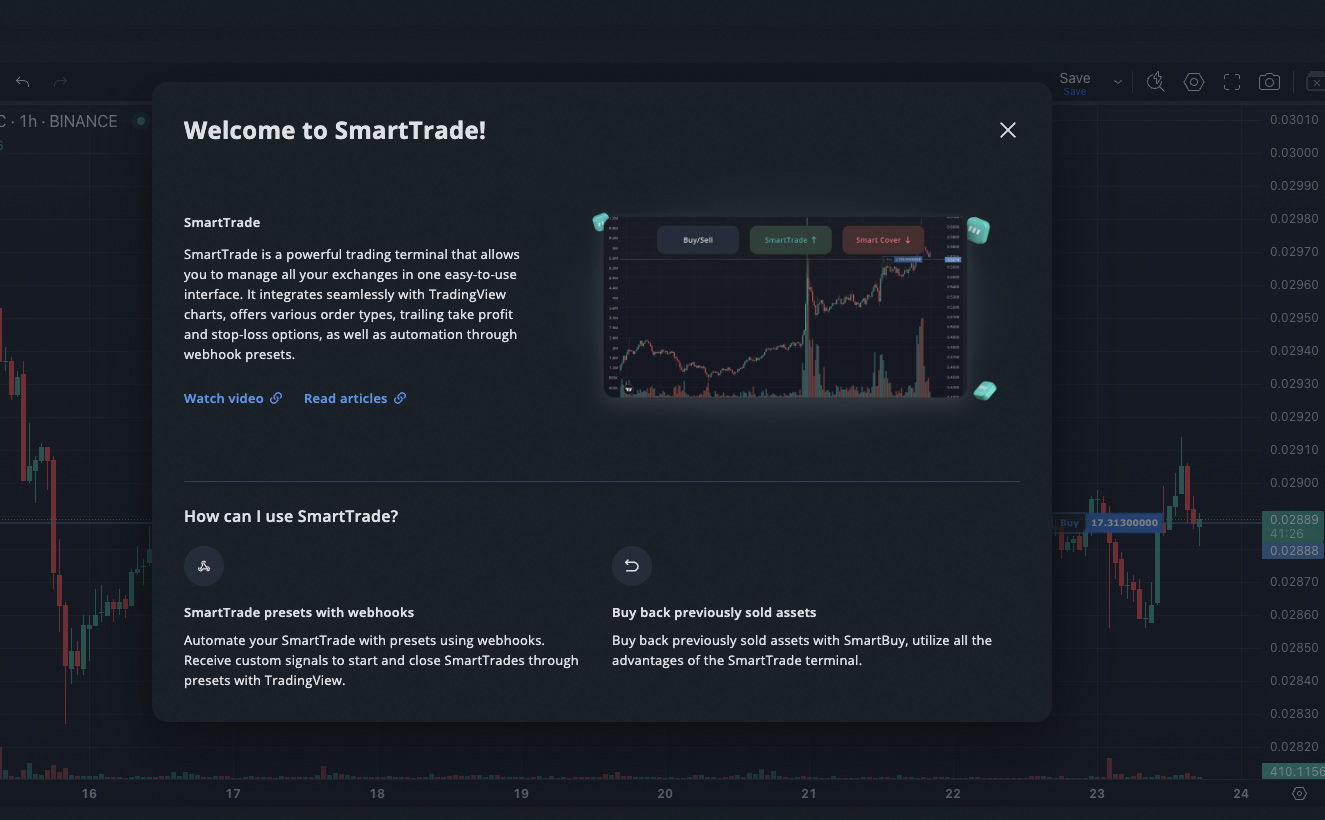
3Commas allows users to connect to signal channels — including third-party providers via TradingView webhooks or its own marketplace — and automatically execute those signals using SmartTrade. The SmartTrade terminal adds a layer of sophistication: rather than a basic market order, trades can include trailing stop-losses, scaled take-profit targets, and conditional entry rules. This means even when you are copying someone else's signal, your execution can be smarter and more nuanced than a simple copy-paste of their order.
3Commas also offers a signal bot specifically designed for copy-style automation, where you point the bot at a signal source and it manages the trade lifecycle from entry to exit. For traders who have used platforms like Pionex or Bitsgap and want to compare approaches, 3Commas sits in a similar ecosystem but with a stronger emphasis on customizable execution logic.
The Real Risks of Copy Trading Crypto
No honest guide on copy trading crypto would be complete without a frank discussion of risk. The model sounds appealing — let someone smarter trade on your behalf — but several structural risks deserve your full attention.
Slippage: The Silent Performance Killer
Slippage occurs when the price at which your order fills differs from the price the signal leader got. In fast-moving crypto markets, even a 0.3% slippage on entry and exit compounds over dozens of trades into a meaningful performance gap. The more followers a leader has, the worse this problem becomes: a large cohort of followers hitting the same order book simultaneously can move the price against latecomers.
Performance Divergence at Scale
Related to slippage is the broader issue of performance divergence at scale. A trader who generates impressive returns with a $50,000 portfolio may produce very different outcomes when 5,000 followers are copying them with a combined $25 million in capital. Their liquidity edge disappears, slippage worsens, and their ability to enter and exit niche altcoin positions quickly is severely hampered. Always check how many followers a leader already has before subscribing — a rapidly growing follower base is a red flag, not a green one.
Past Performance Does Not Guarantee Future Results
This is the most important risk of all, and one that every reputable platform is legally required to disclose — yet it is still routinely ignored by newcomers. A trader who returned 200% in a bull market may have simply been riding a rising tide, not demonstrating repeatable skill. Markets change. The strategy that worked in early 2025 may be completely misaligned with conditions in mid-2026. Always look at performance across multiple market cycles, not just the most recent bullish period.
Counterparty and Platform Risk
Your funds typically remain on an exchange (connected via API), not directly on the copy trading platform. However, platform outages, API failures, or security breaches can result in missed trades or, in worst cases, unauthorized access. Always use API keys with trade-only permissions and never enable withdrawal access.
How to Evaluate a Trader Before Copying: A Practical Checklist
Choosing the right signal leader is the single most important decision you will make in copy trading crypto. Here is a structured checklist to guide your evaluation:

1. Track Record Length and Depth
Look for at least 6–12 months of verified trading history. Be skeptical of providers with less than 90 days of data — anyone can look brilliant in a short bull run. Ideally, you want to see performance data that spans at least one significant market correction.
2. Maximum Drawdown
Drawdown measures the largest peak-to-trough decline in the trader's account. A trader who returned 150% but experienced a 70% drawdown at one point is far riskier than one who returned 80% with a maximum drawdown of 15%. As a general guideline, consider avoiding any trader whose maximum drawdown exceeds 30% unless you have a very high risk tolerance.
3. Risk Score
Most platforms assign an automated risk score. Cross-reference this with the trader's leverage usage and the volatility of their monthly returns. High risk scores paired with inconsistent monthly returns are warning signs.
4. Number of Followers and AUM
As discussed above, a very high follower count can degrade your execution quality. But very low follower counts on an established account might indicate that experienced users have already evaluated and passed on this provider. A moderate, steadily growing follower base is often a healthier sign.
5. Consistency of Returns
Compare monthly return figures month over month. Extremely volatile returns — one month up 60%, next month down 40% — indicate a high-variance strategy that could be dangerous to your capital even if the average looks positive. Look for traders who post steady, repeatable gains.
6. Communication and Transparency
Some signal leaders publish commentary explaining their reasoning, upcoming strategy changes, or market outlook. Providers who communicate openly with their followers demonstrate professionalism and give you early warning if their approach is about to shift dramatically.

Getting Started With Copy Trading Crypto: A Step-by-Step Guide
Ready to take the plunge? Here is a practical step-by-step process for beginners:
- Choose a regulated exchange: Select a reputable exchange like Binance, Coinbase Advanced, or Kraken where you will hold your funds. Ensure it is supported by your chosen copy trading platform.
- Select your copy trading platform: For beginners, Cryptohopper's Marketplace offers an approachable entry point with a wide range of signal providers and clear performance metrics. 3Commas is a strong alternative if you want more execution customization.
- Create and fund your account: Sign up for the platform, connect your exchange via API (trade-only permissions only), and deposit your starting capital. Start small — many experts recommend beginning with no more than 5–10% of your total crypto budget.
- Browse and shortlist traders: Apply the evaluation checklist above. Shortlist three to five candidates and compare them side by side.
- Set your allocation and risk limits: Decide how much capital to allocate to each copied trader. Diversifying across two or three leaders with different strategies reduces your single-provider risk.
- Monitor actively — even though it is automated: Copy trading is not a set-and-forget solution. Check in weekly, review performance against your expectations, and be prepared to stop copying a trader if their drawdown exceeds your predefined limit.
- Review and adjust quarterly: Markets evolve. A strategy that performed well in Q1 may need reassessment by Q3. Make quarterly reviews a habit.
Is Copy Trading Crypto Right for You?
Copy trading crypto suits a specific type of investor: someone with capital to deploy, limited time to actively trade, and a willingness to accept that their results will always be tied to someone else's decisions and market conditions. It is an excellent educational tool too — by watching how experienced traders react to market events in real time, you can accelerate your own learning curve considerably.
It is less suitable for people who need full control over every decision, those with very small capital bases (where platform fees may erode returns disproportionately), or anyone expecting guaranteed profits. Used responsibly, with diversified providers and strict risk limits, it can be a genuinely valuable part of a broader crypto investment strategy.
If you are also interested in fully automated approaches that do not rely on copying other humans, it is worth exploring algorithmic trading bots that operate on technical indicators — platforms like Cryptohopper and 3Commas both offer hybrid paths between copy trading and independent automation.
Frequently Asked Questions
What is copy trading crypto in simple terms?
Copy trading crypto means automatically replicating the trades of an experienced cryptocurrency trader in your own account. When they buy or sell, your account does the same — proportionally scaled to the amount of capital you have allocated. You do not need to analyze the market yourself; the platform handles execution automatically.

Is crypto copy trading safe?
Crypto copy trading carries the same market risks as any form of cryptocurrency investing, plus additional risks like slippage and performance divergence. It is not inherently more dangerous than trading independently, but it is also not a guaranteed income stream. Safety depends on the platform you use, the traders you copy, and how much capital you risk. Always start small, use stop-losses, and never invest more than you can afford to lose.
How much money do I need to start copy trading crypto?
Most platforms have low minimum requirements — some as little as $50–$100 to get started. However, starting with a very small amount may not be practical once platform fees and spread costs are factored in. A more realistic starting capital for meaningful participation is $500–$1,000, which allows you to spread allocations across multiple traders and absorb normal market fluctuations without being wiped out by a single drawdown.
What is the best crypto copy trading platform in 2026?
The best crypto copy trading platform depends on your goals and experience level. Cryptohopper is widely regarded as one of the top choices for its Marketplace, CopyBot feature, and strong exchange integrations. 3Commas is another leading option, particularly for users who want more control over trade execution through its SmartTrade system. Both platforms offer free trials, so testing both before committing is a smart approach.
Can I lose money with crypto copy trading?
Yes, absolutely. You can lose money copying even highly-rated traders. Cryptocurrency markets are volatile, past performance does not guarantee future results, and factors like slippage can mean your actual returns differ negatively from the trader's published figures. Risk management — including setting maximum drawdown limits and diversifying across multiple providers — is essential to protecting your capital.
What is the difference between copy trading and a trading bot?
Copy trading relies on human signal leaders whose real trades you replicate automatically. A trading bot, by contrast, operates entirely on pre-programmed algorithms and technical indicators with no human decision-making involved at the signal level. Some platforms like Cryptohopper offer both: you can copy human traders via the Marketplace or deploy your own rule-based bot independently. Many users start with copy trading and graduate to building their own automated strategies over time.




Comments
24Just successfully copied my first trade ever!! It was only a tiny position but watching it open and close automatically felt like magic honestly. I followed the advice here about checking drawdown first and found a leader with only 15% max drawdown over 8 months. Baby steps but I'm so excited to keep learning. Does anyone have tips on when you'd know it's time to stop copying someone and switch leaders?
Isabella, congrats on the first trade! To answer your question — most experienced copy traders suggest reviewing your leader every 4-6 weeks and looking for red flags like: drawdown suddenly increasing, win rate dropping below their historical average, or them going unusually quiet on trade frequency. Hannah's step-by-step above is really solid too, especially the part about comparing against a simple BTC hold. The community here has so many good resources for beginners, glad you're getting started!
The platforms themselves are the real problem nobody's talking about. I spent three days trying to get my Cryptohopper account properly synced with my exchange and customer support took 48 hours to respond each time with generic answers. Lost potential trades during that window. A guide like this should spend more time warning people about onboarding friction and the reality of support quality when something goes wrong.
I've been copy trading for about 6 weeks now and honestly loving it so far! Up about 12% which I know isn't guaranteed to continue but it's got me really interested in learning more. The guide helped me understand what I was even doing on the platform — I had set up 3Commas before but didn't really understand leader metrics until I read this. Thank you BotVerdict!!
Something nobody's mentioning: what happens during a black swan event or a major exchange hack? Copy traders are often slower to react than the leader because of execution delays. In a fast crash scenario, by the time your copy order executes, the price could be significantly lower than what your leader got. The guide presents copy trading as fairly passive and low-stress but that framing breaks down exactly when it matters most.
just started my copy trading journey last week following this guide 🎉 set up on 3Commas and picked a leader with solid 9-month history like it said. only put in a small amount to test. already had 3 trades execute automatically and it's honestly kinda wild watching it happen in real time lol. will report back!
This is super helpful, I had no idea copy trading was this accessible! I have so many questions though — when you copy a trader, do you copy ALL their trades automatically or can you set filters? Like what if they make a trade I'm not comfortable with, can I stop it mid-way? And does the platform take a cut on top of the subscription fee? Sorry for all the questions, just want to understand before I put any money in!
Liam, great questions! Most platforms let you set filters — you can usually cap trade size, exclude certain coins, and set a maximum number of open positions. You can also manually close any copied position at any time, though timing matters. On fees: Cryptohopper charges a monthly subscription for the bot, 3Commas is similar with tiered plans. Some signal leaders also charge a performance fee on top of that, so always read the leader's profile carefully. Here's a useful starting point: look for leaders who charge no performance fee until you're more comfortable with how it all works.
Small correction to the article: it states that 3Commas supports 'all major exchanges' but as of Q1 2026 they've actually dropped support for two previously listed exchanges following their API policy changes. Readers setting up accounts should verify current exchange compatibility directly on the 3Commas site before committing to a plan. Also the Cryptohopper pricing mentioned appears to reflect last year's tiers — they updated their subscription structure in January.
honestly copy trading sounds chill, let someone else do the stress lol. gonna check out cryptohopper this weekend
For anyone just getting started here's my simple step-by-step: 1) Sign up for 3Commas and connect a small exchange account, 2) Filter leaders by minimum 6 months of history and drawdown under 25%, 3) Start with the minimum allocation and run it for 4 weeks without touching it, 4) Review weekly and compare against just holding BTC. If your leader isn't beating a simple hold strategy after a month, reconsider. Hope this helps someone!
Love how these guides always say 'experienced traders' without defining what that actually means on these platforms. Is it someone who's been trading for 3 months with a hot streak? The platforms have a financial incentive to make their leaderboards look impressive. I'd love to see some independent audit of leader performance claims rather than just taking Cryptohopper's word for it.
Been copy trading on Cryptohopper since last year, it's decent once you get past the setup. The UI isn't the friendliest tbh.
Balanced take from me: the guide is genuinely helpful for beginners and the platform breakdowns are accurate as of early 2026. Pros — clear explanation of how mirroring works, good leader evaluation criteria, practical starting advice. Cons — the risk section feels a bit rushed, no mention of tax implications of high-frequency copy trades, and the 8/10 rating might set slightly optimistic expectations. Still, it's one of the better intro guides I've seen on this topic.
There are a few nuances worth raising about this guide. First, the comparison between Cryptohopper and 3Commas is useful but incomplete — the fee structures differ significantly depending on your trading volume and the subscription tier you're on. Second, copy trading in crypto operates in a very different regulatory environment depending on your jurisdiction. EU users in particular should be aware of MiCA implications for signal-based services entering 2026. Third, the risk management section, while present, doesn't adequately address how leverage interacts with copy positions.
I tried copy trading for four months last year and lost about 40% of my investment following a leader who had amazing 6-month stats on the platform. The historical performance data these platforms show is cherry-picked garbage. Nobody talks about the survivors bias — all the bad traders just disappear and you only see the ones who got lucky. This guide should have a much bigger warning section.
Oscar, that sounds really frustrating and I'm sorry about your losses. But I think it's worth separating the concept of copy trading from the specific leader you chose. The guide actually does mention evaluating leaders carefully — the problem you're describing is more about due diligence than the platform itself. Survivor bias is a real concern but it's also addressable if you know what metrics to watch.
An 8/10 rating feels generous here. The guide glosses over some pretty significant risks. What happens when your chosen leader suddenly changes their strategy or goes rogue? What's the actual latency on copy trades and how much does slippage cost you over time? These aren't edge cases, they're real problems that eat into returns. Would have liked to see some honest numbers on failure rates.
I track all my copy trading performance in a spreadsheet going back 14 months. Current data: following 4 leaders simultaneously, average monthly return 3.2%, max drawdown experienced 18.4%, win rate across all mirrored trades 61%. The diversification across multiple leaders really does reduce volatility compared to following just one. The article mentions this briefly but I think it deserves more emphasis.
Seven years in crypto and copy trading is genuinely underrated for most retail investors. The article is correct that evaluating signal leaders is the most critical step. I'd add one data point: in my analysis of 3Commas leaders over 18 months, roughly 73% who showed strong 30-day returns had significantly worse 90-day performance. Always look at the longer timeframes.
Oh my gosh I've been waiting for a guide like this!! I'm completely new to crypto and the idea of copying experienced traders sounds amazing. Quick question — do you need a lot of money to start? Like is there a minimum investment to actually copy someone on 3Commas? So excited to try this 😊
Priya, to answer your question — most platforms have pretty accessible minimums! On 3Commas you can often start with as little as $100-200 depending on the exchange you connect. Cryptohopper varies a bit more. The key is not to put everything in at once. Start small, watch how the copy trades behave for a few weeks, then scale up if you're happy with what you see.
Really solid guide for 2026! I've been using Cryptohopper for about 8 months now and the signal leader evaluation section here is spot on. One thing I'd add for newcomers: always check the leader's drawdown percentage, not just their profit numbers. A trader with 80% returns but 60% drawdown is terrifying to follow. Start conservative!
copy trading is basically the casino of crypto lol. let someone else pull the lever and hope for the best. honestly though i'm in, where do i sign up
Leave a Comment
All comments are moderated. Your comment will appear after review by our team.