

The question "are crypto bots profitable" has become increasingly urgent as more traders turn to automated solutions in 2026's volatile cryptocurrency markets. While the promise of passive income through trading bots sounds appealing, the reality is far more nuanced than most marketing materials suggest.
Trading bots aren't money-printing machines, but they can be valuable tools when used correctly. This honest analysis will examine real profit potential, hidden costs that eat into returns, and provide data-driven insights to help you determine whether crypto trading bots are worth it for your specific situation.
What Are Crypto Trading Bots and How Do They Generate Profits?
Crypto trading bots are automated software programs that execute trades on cryptocurrency exchanges based on predetermined strategies and market conditions. These bots operate 24/7, analyzing market data, identifying trading opportunities, and executing buy/sell orders without human intervention.
The profit generation mechanism varies by strategy:
- Grid Trading: Places buy and sell orders at regular intervals above and below current market price
- DCA (Dollar Cost Averaging): Buys fixed amounts at regular intervals regardless of price
- Arbitrage: Exploits price differences across exchanges
- Technical Analysis: Uses indicators like RSI, MACD, and moving averages to trigger trades
- Market Making: Provides liquidity by placing both buy and sell orders
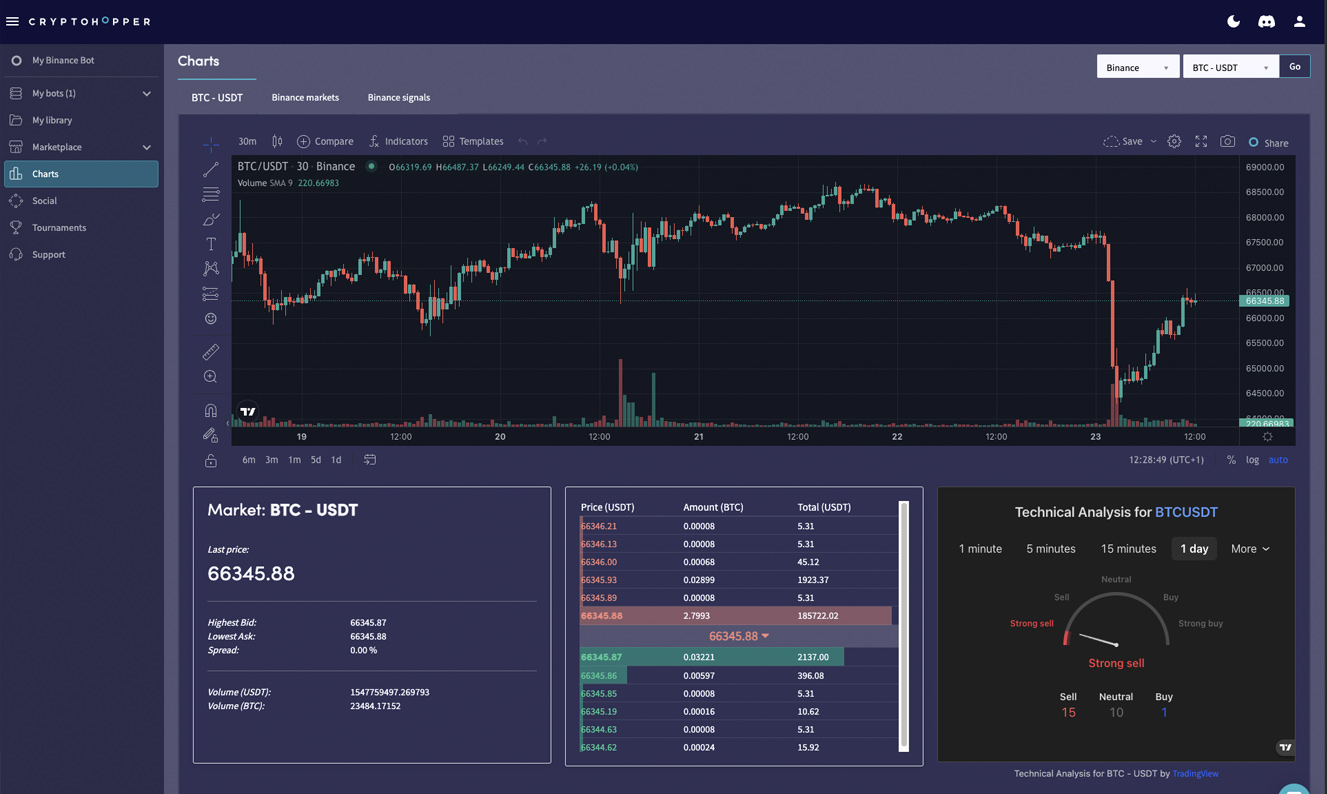
Realistic Profit Expectations: What Returns Are Actually Achievable?
The most common question from newcomers is "do trading bots work" for generating consistent profits. Based on data from legitimate platforms and user reports in 2026, here are realistic expectations:
Annual Return Ranges in Favorable Conditions
Experienced bot users with well-configured strategies typically see annual returns of 10-30% in favorable market conditions. However, these numbers require several important caveats:
- Bull Market Performance: 15-40% annual returns possible with grid trading and momentum strategies
- Bear Market Performance: -10% to +5%, with DCA strategies performing relatively better
- Sideways Market Performance: 5-15% annual returns, ideal for grid trading approaches
- High Volatility Periods: Can boost returns to 30-50% annually but with increased risk
Real Performance Data from 2025-2026
According to aggregated data from platforms like 3Commas, Cryptohopper, and Pionex, the median user return in 2025 was approximately 12% annually. The top 10% of users achieved 25-35% returns, while the bottom 25% experienced losses of 5-15%.
"The difference between profitable and unprofitable bot users isn't luck—it's strategy selection, risk management, and understanding market conditions." - 2025 Crypto Bot Performance Report
Hidden Costs That Eat Into Crypto Bot Profits
When evaluating whether crypto bots are worth it, many traders overlook the various fees and costs that significantly impact net returns:
Trading Fees and Exchange Costs
- Maker/Taker Fees: 0.1-0.25% per trade on major exchanges
- Bot Subscription Costs: $20-200+ monthly depending on platform and features
- API Rate Limits: May require premium exchange accounts ($50-500 monthly)
- Withdrawal Fees: Network fees for moving funds between exchanges
Slippage and Market Impact
Slippage occurs when the actual execution price differs from the expected price, particularly during volatile periods. For bot traders, this can reduce returns by 1-3% annually, especially when using smaller timeframes or trading low-liquidity pairs.
Real Cost Example
Consider a trader with $10,000 capital using a bot that achieves 20% gross returns:
- Gross Profit: $2,000
- Bot Subscription (annual): $600
- Trading Fees (assuming 200 trades): $400
- Slippage Costs: $150
- Net Profit: $850 (8.5% return)
When Do Crypto Trading Bots Make Sense?
Understanding when bots are profitable requires examining the specific advantages they provide over manual trading:
Ideal Scenarios for Bot Profitability
24/7 Market Coverage: Cryptocurrency markets never sleep, and bots can capitalize on opportunities that occur outside traditional trading hours. Data shows that approximately 30% of significant price movements occur during off-hours for most traders.
Emotion-Free Execution: Bots eliminate emotional decision-making, which causes an estimated 70% of retail traders to buy high and sell low. Consistent strategy execution is crucial for long-term profitability.
High-Frequency Opportunities: Grid trading and arbitrage strategies require rapid execution that humans cannot match. These strategies work best in volatile, range-bound markets.
Portfolio Diversification: Running multiple bots with different strategies across various pairs can reduce overall risk while maintaining growth potential.
Market Conditions Favoring Bot Success
- High Volatility: Provides more trading opportunities for grid and momentum strategies
- Range-Bound Markets: Ideal for mean reversion and grid trading approaches
- Bull Market Uptrends: DCA and momentum strategies perform exceptionally well
- Liquid Trading Pairs: Reduced slippage and better execution prices
When Crypto Bots Are NOT Profitable
Recognizing when trading bots don't work is equally important for realistic profit expectations:
User-Related Failure Factors
Inexperienced Configuration: The most common reason bots fail is poor setup. Users who don't understand risk management, position sizing, or strategy parameters often experience significant losses.
Over-Leveraging: Using excessive leverage amplifies both gains and losses. Many bot users chase higher returns through leverage, only to face margin calls during market downturns.
Lack of Monitoring: While bots are automated, they require regular monitoring and adjustment. "Set and forget" approaches rarely work long-term.
Market Conditions That Hurt Bot Performance
- Extended Bear Markets: Most bot strategies struggle in prolonged downtrends without proper hedging
- Flash Crashes: Extreme price movements can trigger stop-losses or cause significant slippage
- Low Volatility Periods: Reduce trading opportunities for most strategies
- Exchange Issues: API downtime or connectivity problems can prevent proper execution

Platform Comparison: Realistic Performance from Leading Bot Services
Let's examine real-world performance data from three legitimate platforms that provide transparent reporting:
3Commas Performance Analysis
3Commas, one of the most established bot platforms, reports median user returns of 8-15% annually for their Smart Trading feature. Their grid bot users achieved higher returns (12-22%) but with increased risk exposure. The platform's strength lies in its comprehensive risk management tools and strategy diversity.
Key statistics from 3Commas users in 2025:
- Profitable users: 62%
- Median annual return: 11.5%
- Top quartile returns: 25-35%
- Average holding period: 45 days
Cryptohopper Real-World Results
Cryptohopper's marketplace model allows users to copy successful strategies from other traders. Their data shows that the top 10% of strategy providers achieved 30-50% annual returns, while the median performance was approximately 9% after fees.
Cryptohopper user metrics (2025 data):
- Strategy success rate: 58%
- Average monthly return: 0.8%
- Most profitable strategies: Long-term trend following
- Highest risk-adjusted returns: Balanced portfolio approaches
Pionex Grid Trading Performance
Pionex specializes in grid trading and offers built-in bots with no additional subscription fees. Their grid bot performance data shows consistent returns in ranging markets, with annual yields of 10-25% being common for well-configured setups.
Pionex grid bot statistics:
- Profitable grid bots: 68%
- Average grid profit: 2.1% per completed cycle
- Optimal market conditions: 15-30% price ranges
- Best performing pairs: BTC/USDT, ETH/USDT
Strategy Configuration: The Key to Bot Profitability
The profitability of crypto bots heavily depends on proper strategy configuration. Here's what separates successful bot traders from those who struggle:
Risk Management Parameters
- Position Sizing: Never risk more than 2-5% of capital on a single bot instance
- Stop-Loss Settings: Set maximum drawdown limits at 10-20% of allocated capital
- Take-Profit Levels: Define clear exit strategies for profitable positions
- Diversification: Run multiple strategies across different assets and timeframes
Market-Specific Optimization
Successful bot traders adjust their strategies based on market conditions:
- Bull Markets: Use momentum and trend-following strategies with wider grids
- Bear Markets: Implement DCA strategies with smaller position sizes
- Sideways Markets: Focus on grid trading and mean reversion approaches
- High Volatility: Reduce position sizes and increase monitoring frequency
Common Mistakes That Destroy Bot Profits
Understanding why most traders fail with bots is crucial for realistic profit expectations:
Overoptimization and Backtesting Bias
Many traders spend excessive time optimizing strategies based on historical data, creating systems that perform well in backtests but fail in live markets. This "curve fitting" leads to unrealistic expectations and poor real-world performance.
Insufficient Capital Allocation
Running bots with insufficient capital makes it impossible to properly diversify or handle drawdowns. Most successful bot traders recommend minimum starting capital of $1,000-5,000 per strategy.
Ignoring Market Cycles
Strategies that work in one market cycle often fail in others. Traders who don't adapt their approach to changing market conditions typically see their profits eroded over time.
The Future of Bot Profitability in 2026 and Beyond
As the cryptocurrency market matures and more sophisticated traders enter the space, bot profitability faces both opportunities and challenges:
Opportunities
- Improved AI Integration: Machine learning algorithms are becoming more accessible
- Better Risk Management Tools: Platforms are implementing more sophisticated portfolio management
- Regulatory Clarity: Clearer regulations are attracting institutional participants
- DeFi Integration: Yield farming and liquidity mining opportunities expand bot strategies
Challenges
- Increased Competition: More bot users means strategies become less profitable over time
- Market Efficiency: Arbitrage opportunities are decreasing as markets mature
- Regulatory Pressure: Potential restrictions on automated trading
- Technology Costs: Advanced features may require higher subscription fees
Making an Informed Decision: Are Crypto Bots Worth It for You?
Before diving into automated trading, honestly assess whether crypto bots are worth it for your specific situation:
Prerequisites for Success
- Basic understanding of trading concepts and risk management
- Sufficient capital ($1,000+ minimum for meaningful diversification)
- Time to learn, monitor, and adjust strategies
- Realistic expectations about returns and risks
- Emotional discipline to stick with strategies during drawdowns
Alternative Approaches to Consider
If you're not ready for active bot trading, consider these alternatives:
- Copy Trading: Follow successful traders on platforms like eToro or Bybit
- Index Funds: Crypto index funds provide diversified exposure with professional management
- DCA Manual Investing: Regular purchases without complex automation
- Education First: Invest time in learning before risking capital
Frequently Asked Questions
Are crypto trading bots actually profitable for beginners?
Crypto trading bots can be profitable for beginners, but success rates are lower compared to experienced traders. Most beginners see annual returns of 5-10% if they use conservative strategies and proper risk management. However, approximately 60-70% of beginners lose money in their first six months due to poor configuration and unrealistic expectations.
What is a realistic profit expectation from trading bots in 2026?
Realistic annual returns from crypto bots range from 10-30% in favorable market conditions. Conservative strategies typically yield 8-15% annually, while more aggressive approaches can achieve 20-30% but with higher risk. After accounting for fees, slippage, and subscription costs, net returns are usually 2-5 percentage points lower than gross profits.
Do trading bots work better than manual trading?
Trading bots work better than manual trading for specific strategies like grid trading and DCA, primarily due to 24/7 execution and emotion-free decisions. However, they're not universally superior—experienced manual traders often outperform bots during major market shifts. Bots excel at consistency and discipline but struggle with adapting to unprecedented market conditions.
What are the main costs that reduce bot profits?
The main costs include trading fees (0.1-0.25% per trade), bot subscription fees ($20-200+ monthly), slippage (1-3% annually), and potential exchange premium accounts. These costs can reduce gross returns by 3-8 percentage points annually. For example, a 15% gross return might become 8-12% net return after all costs.
Which crypto bot strategies are most profitable in 2026?
Grid trading and DCA strategies are currently the most consistently profitable, especially in volatile markets. Grid trading works best in ranging markets (60-70% success rate), while DCA performs well during bull markets. Arbitrage opportunities have decreased but still offer 5-15% annual returns for users with sufficient capital and fast execution.
How much money do you need to start profitable bot trading?
You need at least $1,000-5,000 to start profitable bot trading with proper diversification. Smaller amounts make it difficult to spread risk across multiple strategies and handle drawdowns effectively. Most successful bot traders recommend starting with $2,500-5,000 to run 2-3 different strategies simultaneously while maintaining appropriate position sizes.


Comments
23While disappointed that returns aren't as high as I hoped, I appreciate the honesty. The tax implications section was particularly enlightening - something most bot promoters conveniently forget to mention.
This matches my painful experience exactly. Lost 40% of my portfolio last year chasing high-yield bot strategies. The section on market volatility impact should be required reading - sideways markets killed my momentum bots.
Not gonna lie, was hoping for bigger returns but at least I know what I'm getting into now. Time to adjust my strategy and expectations.
Solid breakdown. The 6-month ROI comparison table was especially useful. Finally some real data instead of promises.
Been burned by overhyped bot marketing before, so I appreciate the honest approach here. The section on market maker vs taker fees really explains why my costs were so high. Wish more sites would tell the truth upfront.
ngl this was a reality check i needed 💯 thought bots were gonna make me rich overnight but the math dont lie
Love seeing realistic expectations finally being discussed! I've been mentoring new traders and this article perfectly explains why patience and proper risk management matter more than chasing quick profits. Sharing this with my group immediately.
The API limitations section is particularly valuable. I've tested multiple exchanges and the rate limiting issues mentioned can seriously impact high-frequency strategies. Binance allows 1200 requests per minute while others cap at 600.
Small correction: the article states average grid bot returns as 12-18%, but the chart shows 10-16%. Also, the timeframe for the backtesting period isn't clearly specified in the methodology section.
As a complete beginner, this article saved me from making expensive mistakes! I almost invested my entire savings into a "guaranteed profit" trading bot. The risk assessment section really opened my eyes to what could go wrong.
Camila, so glad you found this helpful before making costly mistakes! For beginners, I always recommend starting with demo accounts first. The learning curve is steeper than most people expect, but articles like this make it much clearer.
This article could have saved me $3000 if I'd read it earlier. The section on market conditions affecting bot performance is crucial - my momentum bots got destroyed during the March correction. Where was this honest analysis 6 months ago?
Oscar, I feel your pain but the key is diversification across multiple strategies. The article mentions this - never put all your capital into one bot type. Try mixing DCA with grid trading and maybe some mean reversion strategies.
I've been tracking my bot performance in a spreadsheet for 14 months. The 8-12% annual return mentioned for basic DCA bots matches my data exactly. Current average: 9.3% with maximum drawdown of 22%.
While I appreciate the honest approach, I'd like to see more transparency on the data sources. How many bots were analyzed? What's the sample size for the performance metrics? The methodology section could be more detailed.
Daniel raises good points, but BotVerdict has always been transparent about their testing methodology. They've been analyzing bot performance for years and their track record speaks for itself. This kind of honest analysis is why I trust this site.
Lol the "get rich quick" myth finally getting busted. Been there, done that, lost the t-shirt. Bots are tools, not magic money printers 😅
The institutional perspective here is valuable. Most retail traders underestimate the importance of proper risk management and position sizing. The 15-25% annual return expectation for sophisticated strategies aligns with our internal models.
Such an eye-opening read! I was expecting 50% returns from bots but this reality check is needed. The section on backtesting vs real performance really hit home - my paper trading results were way better than live trading!
I've been running bots for 8 months and this analysis matches my experience perfectly. The part about slippage eating into profits is real - my arbitrage bot lost 12% last month just on transaction fees during high network congestion.
This is exactly what I needed to read before jumping into bot trading! Quick question - the article mentions grid trading bots performing better in sideways markets. Are there any specific parameters you'd recommend for someone starting with $1000?
Liam, for grid bots with $1000, start with wider grids (2-3% spacing) and stick to major pairs like BTC/USDT. The article's risk management section covers this well - never risk more than 5% of your portfolio on a single bot strategy.
Finally, someone willing to share real numbers instead of unicorns and rainbows. My DCA bot averaged 18% last year, but that was during a bull run. The bear market reality check in this analysis is spot on - most bots lose money when volatility drops.
Leave a Comment
All comments are moderated. Your comment will appear after review by our team.